Currently Reading: Caste by Isabel Wilkerson
Showing posts with label Booker. Show all posts
Friday, May 31, 2013
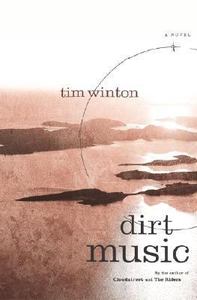
Dirt Music
Tim Winton fills Dirt Music with severely damaged characters - and I'm not sure I was able enough to like them enough for the novel to work for me. Georgie Jutland is a natural carer who isn't caring for anyone, including herself, and is on a downard slope to alcoholism and self destruction. The man in her life is Jim Buckridge, a blokey Western Australian who may never get over the death of his wife. And, after a one night stand, the other man in her life is the much younger Luther Fox, who should be a soleful musician but who makes a living as an illegal fisherman because he is haunted by violence and loss. Its not clear how any of these characters can be redeemed, and they certainly try to find redemption and healing through each other. But plot twists take us into implausible waters and Winton ultimately did not hold my attention.
What did captivate me about this book was Winton's beautiful sense of place - the coasts and interiors of Western Australia. Perhaps because I spent some time living and traveling in Western Australia, I felt his images were evocative. I could really picture the light - the harsh mid-day glare, or the golden dusty sunsets permeated nearly all of his scenes. He captured perfectly the essence of small town Western Australian life without relying on stereotypes or characatures, which I really appreciate. Still, I didn't enjoy it enough to recommend it to anyone I know.
Thursday, May 30, 2013
Never Let Me Go
Predictably, I'm entranced by yet another Kazuo Ishiguro novel. Never Let Me Go caught and held my attention, surprised me (even in the way that it surprised me), and will have me reflecting on its themes for some time to come.
Kath, Ishiguro's main character, is another subtly unreliable narrator. Her narrative style is deceptively simple - a bit of "dear diary" and lots of plain blunt language. If you think her style is boring, I believe you are missing the marvellously rich subtext lying in the things Kath does not quite say. The narrative push comes from her allusion to stories before a chapter break after which she tells the story. This style, combined with the touch of mystery, made this hard for me to put down.
It turns out that the mystery aspect, as well as the "science fiction" aspects of the story ended up being the least interesting things about this novel. Instead, this is a story about the human condition, and the themes are distilled by filtering them through the lens of a dystopic alternate reality. The most striking idea for me was the idea of community - how we need to construct communities, how belonging to a community can distort a person's perception of fundamental aspects of life, and what it means to a person who is left out of community, or whose community has disappeared - and perhaps ultimately the tragic loneliness of the human condition.
At some point toward the end, I became frustrated that this was not actually a mystery novel, and that it did not tackle the 'political' aspects of the issues it raised. But the characters' submission to their destinies moved the spotlight to the contemplation of what it means to have a full life - can it be that art, love, friendship, belonging, duty, and sacrifice are enough? I'm still not sure.
Highly recommended.
Monday, October 8, 2012
Darkmans
Darkmans by Nicola Barker is the most modern novel I have ever read.
I was set up to be unimpressed. Its a brick of a novel - at 838 pages my paperback copy weighs in at more than 2.5 lbs. In addition to its doorstop quality, the novel is published in a sans serif font and is littered with italics - two things that generally drive me nuts. Furthermore, Barker's use of large spacing to denote inner thoughts of her main characters took me several hundred pages to get used to - and all that empty space contributed to the large size of the final product.
I thought it would be a chore to read, and I had already given myself permission not to finish if I couldn't make it through before my library check out expired. But about 300 pages in, I began to have a hard time putting it down. By the end I was actually disappointed that it wasn't even longer.
The novel follows seven main characters, all loosely connected and living in Ashford, England at one end of the new Channel Tunnel. The book opens with Daniel Beede, a man who had originally petitioned for the location of the Channel Tunnel, but when the plans called for the destruction of a historic property his support turned to protest. His failure to halt the construction haunts him daily.
There was an ugly scuffle. But he saw it! He stood and watched -- three men struggled to restrain him -- he stood and watched -- jaw slack, mouth wide, gasping -- as History was unceremoniously gutted and steam-rolled. He saw History die --
NO!Kane, Beede's son is also haunted by history, as he flashes back to his mother's slow wasting death while he, a teenager, acted as her sole caretaker. In their own ways, each of the other major characters carries the weight of their history on their shoulders, and each are also plagued by the kind of modernity symbolized by the Channel Tunnel. There's Isidore, an apparently mentally ill security officer, his wife Elen, a chiropodist, and their autistic son Fleet; Kelly Broad, Kane's teenage ex girlfriend; and Gaffar, a Kurdish immigrant who acts as personal assistant to Kane in his dealing of prescription drugs.
You're killing History!
STOP!
Kane, Beede, Dory, Elen, Fleet, Kelly and Gaffar are all to varying degrees also haunted or inhabited by something more insidious - the Darkmans. Is the Darkmans the spirit of John Scoggin, a jester to the court of Henry VIII? Is it perhaps the small angry bird Phlegein?
Or are these characters each falling prey to their own mental weaknesses and driven by History. Perhaps the Darkmans is just a manifestation of their various schizophrenia, autism, drug use, etc. Or maybe Elen, who appears to be at the center of all of this, is actually causing these possessions or hallucinations. I spent the better part of this novel wondering if something supernatural was actually occurring, and I'm not sure I have a conclusion.
The past keeps piling up. Yes. But that's only normal, surely? Sometimes I wonder if I am the only one who sees it, if I am the only one who sees the same tree -- the same old book, the same wall, the same piece of road -- as thousands of eyes have seen it before, and who feels the weight, the terrible weight -- the actual weight -- of all this apprehension. As if I am the only one who feels history, who sees the atom of pure emotion raging away behind everything. The buzz and clash of the atom. This awful friction. This urge to truth. This urge to destruction. This urge to vengeance. Oh God! Where does it flow from? Why? For what?! And how much longer can I possibly be expected to hold it all back?Her imagery is immediate and visceral; the characters, eclectic and engaging; the plot, haunting. Its a book I'll be thinking about for weeks to come.
As an afterthought, this is the third novel I have read that was nominated for the 2007 Booker prize - and each of these have been truly fantastic. It must have been a very hard choice for the committee, and I'm torn about whether I would have picked this one, or Animal's People. The Committee chose The Gathering, which was also excellent, but perhaps predictably resembles many other past winners in ways that neither Darkmans nor Animal's People did.
Wednesday, September 26, 2012
The Story of Lucy Gault
Yet another Booker book with a fantastic set up that fails to deliver. Lucy is mistakenly, through a series of unfortunately events, abandoned by her parents at the tender age of seven. Under the impression that she has been downed, her parents abandon their home, flee Ireland, and in their grief do not look back for over 30 years. But Lucy has not died - she remains in the home waiting hopefully for her parents' surely imminent return. And the reader waits with Lucy.
But as time progresses, it becomes apparent to the reader well before it is understood by Lucy or the small community supporting her that the return of her parents can only be a disappointment. Lucy is no longer a litter girl but a grown woman, whose choices have left her isolated and outside of the sphere of the living for entirely too long. No reunion can achieve what either Lucy or her parents secretly wish for - for everything to be made whole.
But because it is primarily a book about waiting, about life slipping by unlived, it is ultimately not a very engaging story. Perhaps this was William Trevor being too good at achieving what he set out to do. Sure, Trevor's prose is clear and descriptive, but it was not enough to keep me wanting more. I was consumed by the isolation and hopelessness, and the sense of wasted life that were the themes of this novel, and no ending could have reinvigorated me enough to induce me to recommend this book very highly to others.
Thursday, September 13, 2012
Breakfast on Pluto
I had a hard time with this one. The main character is Patrick "Pussy" Braden, a transvestite prostitute. Patrick was fathered by an Irish Catholic priest and dumped in an abusive foster family - and he dreams of his beautiful birth mother. Pussy is an outcast in her tiny Irish hometown , and she leaves, first for the City and then for London to seek a better life. But Pussy has bad luck when her married politician sugar daddy is killed by Irish terrorists, and then in London where she becomes a prostitute and gets mixed up in terrorist plots.
To start, I think it would have helped if I recognized more of the popular cultural and historical references to Ireland and England circa 1970. I know I missed an awful lot of the references (for example, the title of the book), and I even had a hard time following the plot references to terrorist plots because I just don't know much about the era. I'd be interested to know if anyone who enjoyed this book could confirm that having this understanding helped their enjoyment.
But unlike other novels set in unfamiliar times or locales, I was not inspired to learn more because I wasn't connecting with the story or characters. This is probably because I found the narrative thread to be very weak - the chain of events was hard to follow, and it seemed to jump around a lot between times and places with little continuity. I like something with more of a story arc. As a result, I got lost and ended up rushing through the end just to be finished. While Pussy was certainly a colorful and interesting character, the book didn't manage to retain my attention.
I finished this book on June 17, 2012.
Monday, September 10, 2012
The Secret Scripture
After completing this novel, I have decided that Sebastian Barry is one of my very favorite novelists - and I have only read two of his books. It is his rich and detailed writing style that I love - and his ability to connect his images to a story and to characters that I connect with on an emotional level.
The narrative is split between two characters - 100 year old Roseanne is an inmate at an asylum, and has been for many many decades. She's not clear why she has been committed to the asylum for all of these years, but she recounts her past as she remembers it in her journal, which serves as half of the narrative. Her doctor, Dr. Greene recounts the other half of the narrative in his medical log. He too does not understand why Roseanne has been an inmate and he is drawn to unearthing her past just as he avoids his own.
The Secret Scripture is a novel about memory and the past - as my favorite Irish novels seem to be. But it is also a beautiful story about loyalty, loss, and the tricky line between independence and isolation. And through this, Barry creates fantastic images. I can still picture the burning rat, and Roseanne's mother's clock, because they were described so richly and connected scenes that evoked very strong emotions. The hammers and the feathers --I can still see them falling.
Simply put, I really enjoyed this book. The imagery was so compelling because it was connected to a moving mystery told by two engaging and complex characters. I loved both the story being told by Roseanne, and the story that lay underneath as revealed by Dr. Greene - both the mysteries and the answers. In my opinion, it surpassed The White Tiger, which won this year.
Thursday, September 6, 2012
The Map of Love
*I know I have been silent for some months - we recently welcomed our first child! I promise that I have been reading, but I have a lot of writing catch-up to do, as I was very tired throughout the last trimester. Now that I am on maternity leave, I am hoping to catch up on posts while the baby is sleeping.*
The Map of Love, by Ahdaf Soueif, was a decent attempt at an epic multi-generational love story, that fell flat for me. While I thought it was a nice story, I never really got drawn in, and a few of the author's loose ends or bizarre, unexpected and ultimately dropped plots ended up irking me long after the novel was finished.
In the present day, a young American woman, Isabel, has become smitten with the older Egyptian-American conductor, Omar. In an attempt to become closer to him, and to learn more about her own Egyptian roots, Isabel visits Omar's sister in Egypt. There, the two unravel the story of Isabel's ancestor, the Englishwoman Anna Winterbourne, who falls in love with Sharif al-Barodi in Egypt in 1901. Somewhat coincidentally, Anna's lover's sister is an ancestor of Omar. (Did you keep that straight? There is a very useful family tree on the front sheets of the novel that I had to refer to frequently...). And it gets even more confusing, as a subplot involving possible incest is put forward and then dropped almost casually, without adequate resolution.
While I found the story of Anna and Sharif to be interesting and at times poetic, it never felt very plausible. I'm not one for love at first sight stories - if you want me to believe that two people fell in love in the space of one or two shared moments, they had better be pretty magical moments. I was never convinced that Anna and Sharif had the emotional compulsion that would have been necessary to enter into their bi-cultural marriage. The characters were just too flat. Also, in an attempt to place their romance in the context of the greater political reality, their story dragged through the middle of the book, and I lost interest in the romance and started to wonder when we were going to get to the climactic death (this being the downside of the family tree, with birth and death dates for every character).
Also implausible were the ways in which the characters in the present-day narrative were all related to and interconnected with each other. I found it highly unlikely that Isabelle would fall in love with a famous Egyptian-American in New York City who also happened to be her distant cousin, and who also knew her mother in New York many decades earlier, unbeknownst to Isabelle. And the situation was not helped by the fact that these characters suffered from the same two-dimensional limitations as the historic ones. Perhaps in an attempt to explain these coincidences, Soueif mixes in some magical realism elements in the eleventh hour of the story, which was totally out of place and only served to muddle the story line.
This review seems harsh - despite the narrative problems, I enjoyed reading the book. There were, for example, some really lovely descriptions of family life in Egypt at the turn of the century. It just didn't sit well with me once it was over.
I finished this book on July 13, 2012.
Saturday, May 5, 2012
The Hiding Place
I have to admit I was confused and a bit disappointed by this Booker nominee. The Hiding Place follows the life of Dolores, the sixth daughter born to a Maltese immigrant and his Welsh wife. As her name might foreshadow, Dolores' life is not easy. She experiences a tragic injury in her infancy resulting in disfigurement, and she suffers various forms of neglect and abuse at the hands of her overwhelmed and impoverished parents, and her older sisters. The narration is divided into two - in one Dolores the child narrates various events of her youth, and in the other an adult Dolores returns to her home in the wake of her Mother's death, and remembers slightly different events with her remaining sisters.
In this her first novel, Trezza Azzopardi has moments of descriptive brilliance, for example in describing Dolores' disfigured hand:
I lost the fingers. At one month old, a baby's hand is the tiniest most perfect thing. It makes a fist, it spreads wide, and when it burns, that soft skin is petrol, those bones are tinder, so small, so easily eaten in a flame. But I think of it as a work of art: a closed white tulip standing in the rain; a cut of creamy marble in the shape of a Saint, a church candle with its tears flowing down the bulb of wrist.
But her narration is troublingly inconsistent - young Dolores knows details of events that occurred prior to her birth or when she was an infant, and yet adult Dolores does not appear to have conversed with her sisters or family about these events since she was a young child (if ever). But her narrative inconsistencies are not provocative or profound, alluding to something deeper - I just found it annoying.
The cover jacket compares the novel to Angela's Ashes as a tale of poverty and hardship among an immigrant community. I was reminded more of The Gathering, which addresses similar familial issues but in a much more emotional and stirring way - I recommend you read that one instead.
Thursday, May 3, 2012
The Glass Room
Some parts of this novel are still resonating with me, like the sound of metal falling against the onyx wall of the Glass Room. Other parts of the novel dragged - it seemed new characters were introduced simply as an excuse for creating suspense and prolonging the climax. Still, it was an interesting read, engaging at parts - a worthy Booker nominee.
The novel features the lives and family of Liesel and Viktor Landauer, a German/Jewish couple living in Czechoslovakia after Europe's Great War, and Liesel's closest friend Hana Hanakova, a truly modern Slavic woman. However the house in which the Glass Room of the title resides is really the main character of this novel - from its conception and design, to its construction, and then following its various occupants through World War II and post-war behind the Iron Curtain up to the 1990's. The Glass Room stands as a symbol of openness and modernity to the Landauers: a place of light, and steel and glass and air. It is a place of romance and dreams as well. But to its various occupants, its symbolism seems ironic and hypocritical. The "openness" is belied when Viktor harbors his mistress within the walls of the room, the Nazis warp the "modernity" it symbolizes by using the house to study human forms for the purpose of identifying and categorizing members of each race. And the dreams of the future are battered down under the footsteps of the sick and injured children who go to the house under the Soviet regime to be rehabilitated.
I very much liked the themes and setting of this novel, but other parts of it did not work as well. While I found the character of Hana to be engaging, interesting, and always surprising, other main characters, including Viktor and Liesel, were much less compelling. Also, there was something clinical in the description of the house itself that permeated the entire novel - it was distancing and a bit off-putting. Overall a good but not great novel.
Monday, April 23, 2012
The Remains of the Day
This is my first Kazuo Ishiguro novel. I was expecting to really enjoy it - and it surpassed my wildest expectations. In this tale of the tragedy of servitude, what Ishiguro does not write is even more powerful than what he does. His adept use of languge and deep subtelty paint a rich, beautiful, and in many ways timeless tragedy - and it was wonderful.
In Remains of the Day, Stevens, a middle aged butler at a well-to-do English country mansion is given several days off by his new employer. He decideds to take a trip, both physically and metaphorically, as he muses about the great events of his life over the course of his travels. At first, Stevens' musings seem mundane, trite, and perhaps even boring. But Stevens' explanation of his dedication to his job and absolute loyalty to his master, his self-sacrifice and his definitions of what make a butler great began to appear to describe something much larger - and the ways in which I started to compare his story to the tragic figure of a samaurai warrior were fascinating to me. The parallelism between English butlers and Japanese samaurai, or really any servant class in an honor culture, was so rich that I am still wanting to read commentary and consider all of the angles days later.
Stevens' tragedy is, ultimately, that the man for whom he sacrificed his life - his family, his friendships, his individuality, and his chance at love, seems not to have been worthy of such a sacrifice. This soft, lingering tragedy is as heartbreaking as it is beautifully written, and I would highly recommend this to everyone.
Sunday, April 8, 2012
Atonement
I finished this book a few months back, and it has taken me this long to finish a blog post about it. Its not that I didn't like this book - it was very well written, and the story sucked me in. Maybe because the end was so jarring - I sat back and reflected about the novel for a long time trying to piece the whole together. Maybe it is because it had come so highly recommended to me - and I really thought I would like this more. But having just finished watching the movie, I find my thoughts distilled enough to proceed.
Many people seem familiar with the plot: Briony is the youngest child in a affluent home. Out of boredom, powerlessness, naivete, and motives I'm not sure even Briony understood, she accuses a family friend of a horrible crime - and then suffers with the guilt of her knowledge for the rest of her life. Briony's choice to change the end of her story for her readers begs many interesting questions - what is the intrinsic value of honesty? How much guilt can and should a person suffer or self-apply in the aftermath of such an event? How much responsibility can be taken for the outcome of a series of events that one may have set in motion, but did not further contribute to?
Needless to say, the writing is exquisite. The story is vivid - especially in parts 2 and 3. describing the war scenes and the hospital. But the characters, while interesting, were not as compelling as I had hoped or maybe needed. Each of the main figures serves as a person and as a sort of allegory or type, which distanced my emotions from them in the book. Also, they were mostly annoying aristocratic types, which I did not connect well with. This was not so in the movie, which (unusually) was better in connecting my emotions to the rawness and tragedy of the plot in a way I was not able to in the book.
The film's ability to connect me to the story did not come without certain sacrifices. In the movie, many of the fascinating ambiguities are necessarily lost, and the story is reduced in its complexity. But perhaps that is precisely my problem with the book: the nuances and complexity were a bit too much to also permit a deep emotional connection.
Instead of feeling the book was deeply meaningful, when I finished this book and put it down I was immediately over it. But watching the film has reminded me of the fantastic aspects of the book, and I find myself more than willing to keep and open mind and give it a re-read another time.
Thursday, March 22, 2012
C
The more I sit and think about this novel, the more I am fascinated by it - I think it might be brilliant. This is not to say I enjoyed every aspect of my read, or that I understood why on earth Tom McCarthy took me to certain places until well after they were over. But his dexterous weaving of complex themes is starting to make more and more sense as I reflect on them - or am I finding patterns and interpreting codes that don't exist?
The novel opens with the birth of a baby boy, Serge Carrefax, second child of an eclectic set of parents. Serge's father runs a school for deaf children that emphasizes teaching them to speak and be understood - and he is fascinated with "modern" wireless communication technology. Serge's mother is deaf (and a former student) who inherited a family silk factory - complete with insect-residents. Serge's older sister Sophie is his greatest companion (and a compelling character) until her untimely death. From these characters, three themes emerge - communication, insects, and death - and are repeated in countless ways time and again through Serge's action-filled life.
It is the continual re-appearance of these themes in Serge's life that ultimately makes this book a comprehensive unit. Serge's adventures as a sick adolescent, WWI pilot, architecture student, drug addict, and Egyptian explorer often cause jarring juxtapositions in the story that took me some getting used to. But I'm having so much fun reflecting back on what it all means, and trying to decode the appearance of insects, communications and death throughout the book, that I'm not sure it matters to me anymore. And don't get me started on the book's title - there are so many instances of the letter C that I can't begin to decide the importance of them. And what about Serge's lifelong problem conveying physical perspective (a problem indeed for a student of architecture)? I would love to convene a discussion group just to pick apart this novel.
Although sometimes I felt lost in the middle, this read was worth it and has stayed with me for many days.
Thursday, March 15, 2012
The Famished Road
Reading The Famished Road was like experiencing a dream. The characters, scenery, setting and action seemed constantly fluid entities, capable of changing shape and status at any given time. While I found this reading experience to be new and profoundly different, and at first fantastic and engaging, Ben Okri was unable to maintain my interest in this dream for such a prolonged novel.
Partly because it was so dreamlike, i found myself frustrated by the fact that there was very little conventional "plot." Story lines sprung up from nowhere, and melted away almost as quickly. Characters changed from good to evil depending on the mood of the narrator; events of major importance and symbolism are never carried through to their completion; and cycles are repeated with very little apparent consciousness or learning from past experience. I looked deeply for the meaning behind symbolic characters (e.g., the photographer, Madame Koto, the blind man, the beggar girl) but I could not fit the pieces together.
Reading this makes it sound like I really didn't enjoy the book. In fact, for the first 2/3 I was very engaged and fascinated by the complex dream narration of Azaro, our child narrator. Azaro's story is one of poverty, struggle, corruption and human sacrifice in a Nigerian town. His themes include the constant battle between life and death, rich and poor, and good and evil. However, once it became apparent that despite reaching a climax of sorts, the novel was pressing on in its aimless meander through spirit world adventures, I lost interest. The only real problem for me was it was too long.
Sunday, February 12, 2012
Astonishing Splashes of Colour
This is the story of Kitty, a woman with a peculiar family history who has suffered a personal tragedy resulting in the loss of her unborn child - and the loss of her ability to have children. This experience has knocked Kitty a little off her rocker, and we follow her through a series of interactions that cause her to unravel further.
I really wanted to like this novel because of its title. As the first few pages indicate, "Astonishing splashes of colour" is a quote from Peter Pan, which evokes an image of an adult who failed to achieve maturity, and prefers to live in a land of childhood. In many ways, this is Kitty - so much of her identity is wrapped up in the fantasies she has created about the mother who was absent from her childhood, and about her older brothers, and even about her unique marriage partner. And of course, her mental images of these people cannot stand up to the truth as it is revealed to her throughout the story, and this created much of the driving force of the plot.
But ultimately, while I appreciated moments of this novel, it fell short for me. I can't say I actually enjoyed it. I think in order to appreciate the novel you have to like, or at least understand and sympathize with Kitty. But I found her frustrating, foreign, and unsympathetic for most of the story. Her choices are sometimes so poor that I could only cringe and watch the fallout from a distance - and that's not how I feel about the characters I engage with.
An interesting nominee, but not really my taste.
Saturday, January 21, 2012
Sacred Hunger
This is my first re-read in my Booker challenge, so I have to admit to already knowing I love this book. I think this might have been my fourth time through, but having the focus of needing to write a blog post helped me enjoy the writing in a new and deeper way.
This is a novel about the triangle trade in the mid 1700s, and is it about the struggle between greed, profit, humanity, enslavement, liberation and civilization - some pretty heavy themes that I traditionally associate with American literature (though Unsworth is British). So much about this book is exquisite: the depth of the characters, the fluxuating narration style, the the vivid metaphor and rich language, and the incredibly moving story. The juxtaposition of Erasmus and Paris was a perfect tool in playing out the contradictions and moral pitfalls of the various aspects of the slave trade. And even though there are probably a hundred named characters in the novel, each character, no matter how minor, came across as a complete and real person, with a purpose in the narrative.
One of the aspects of the writing that really struck me this time around was the prevalence of metaphors related to slavery, and the various ways in which people and even objects can be shackled, caged, and enslaved - including and especially the drive for profits, the Sacred Hunger of the title:
It is always through arbitrary combinations that experience enslaves the memory. New shackles were being forged here, in the light-filled loft, amid smells of oil canvas and raw hemp and tar, the creeping fringes of the sail-cloth, his feelings for Sarah Wolpert and for his father.I first read this for part of an interdisciplinary college course called "Slavery and Labor in Film and Literature" - and it was by far the best part of that class. It is still one of my favorite of all of the Bookers I have read - and I couldn't recommend it more highly.
Tuesday, January 10, 2012
Bitter Fruit
Set in post-apartheid South Africa, the Ali family's broken relationships are on display in this miserable little novel. The Bitter Fruit of the title is Silas Ali's warm beer of escape, white Kate and Julian's newborn democracy in which they are no longer wanted, and, most especially, Lydia Ali's son Mikey, born after her rape over 19 years ago.
Achmat Dangor's expression of all of this bitterness is in the various troubled sexual activities, encounters and desires of his cast of characters. They include the violence of rape, the apathy of unwanted marital sex, inappropriate seduction between age groups, infidelity, homosexuality (female and male), and incestuous urges and actions of all kinds: father/daughter, mother/son and nephew/aunt. After a while, these sexual encounters lost their shock value - and did not appear to have any other important value. This theme seemed like a badly-contrived plot device in lieu of an actual story or compelling characters, and I was over it long before it was over.
Other themes that I might have found interesting emerged late in the story, including the amorphous definition of race and the plurality of religion possible within a single family in modern South Africa. Perhaps because I was not a native reader, I had a hard time figuring out each characters racial identity - and I couldn't determine whether this was because of my ignorance in picking up on cues particular to the country, or whether it was intentional on behalf of Achmat Dangor. Religions seemed a bit more obvious, and the way each character is liberated and also confined by his or her religious upbringing was teased out nicely. However, it wasn't enough in the end to encourage me to care about the characters at the climax of the action, or to care about the unresolved pieces.
Wednesday, January 4, 2012
The Sense of an Ending
I usually review books with a copy in front of me - but this year's Booker Prize winner needed to be returned before I could finish my review. Or re-read it.
The first thing I remember reading in this short snappy novel is its first Library of Congress Subject Heading. These types of headers are published in every novel catalogued by the U.S. Library of Congress (I'm assuming international readers aren't as familiar with them, but maybe I'm wrong - anyone?). I like to check them out to get a sense of a novel's themes, locations, and characters -- and because I'm a big nerd. The first subject heading tag read: "Middle-Aged Men -- Fiction." Not the most effective way to catch my attention.
Luckily, I read more. In fact, I read the entire book in one sitting because I couldn't put it down. The story itself was simple enough. In fact, the entire plot can be (and is) reduced to a single line of equation about 2/3 of the way through the book. But the way Barnes related the story, intermingling the main character's reflections, gave the story a powerful emotional charge. The bisecting of the story into two unequal parts was very effective, and I'm sure you can look to any number of other reviews for some truly fantastic snippets of quotes on memory, self-delusion, and storytelling. Once through the first time, I realized that I had probably missed picking up on an enormous number of tiny clues, and literary moments that would make a re-read thoroughly enjoyable. I will definitely read this book again.
Overall, I agree that this was perhaps not a "major" work - it was not an epic, it did not effect a major change on the way I read or see the world. But it was a thoroughly enjoyable, intelligent, and compelling novella. This win reminded me of the win of Ian McEwan's Amsterdam - another great little novel by a well-deserving author, and I'm not sad that it won.
Monday, December 19, 2011
The English Patient
I suspect that reading The English Patient and watching the movie are very similar in that you either like the slow pace, character sketches, and reflective mood - or you hate it. In some ways, I am disappointed that I saw the movie first - it colored my visual images of the characters and the villa, and gave away the ending. But of all movies to see first, this one captures the mood, pace, and style of the writing beautifully - it was wonderful in both formats.
When I was reading it on the bus, someone asked me "Oh, The English Patient - its a love story isn't it?" And I hesitated - "not really..." Perhaps because the focus of the movie was the romance. This novel is so much more than a story about the English Patient and the nurse Hannah, or the Patient and his mistress Katherine, or Hannah and Kip. It is a mystery story, and a story about war, and its aftermath, and the global consequences that can sometimes be felt even in a confined place and time. It is also a story about the various ways a person can lose his or her identity, and what can be dome to reclaim it.
By far, the most fascinating character in my opinion was Kip, the Sikh sapper from India. His complex relationship with his familial and cultural background, and his troubled experience in the Western world at a time of the blurring of national lines were very compelling to me. Each of the characters was, in their own way, nationless and without family - and Kip's story highlighted these elements in all of the other characters. And I really enjoyed the literary tension created by each explosion - literal or metaphorical, which were tied to Kip as well. Overall it was a fantastic novel - highly recommended.
Monday, December 5, 2011
Mother's Milk
Edward St. Aubyn's quirky, scathing little novel touches on a resonant subject, which made for a surprisingly delightful and balanced read. The tale is narrated by three members of the Melrose family who are as a whole intellectual, self-centered and empty people. The narration bounces between characters with ease; from precocious 5-year old Robert who opens the book narrating the circumstances of his birth first hand in a bitter voice, to Patrick, the father of the family narrating his dissatisfaction with life resulting in substance abuse and infidelity, to Mary, the mother, and her preoccupation with mothering and spoiling her second son, to the detriment of all other relationships. They are a witty, sarcastic bunch who offer negative yet entertaining commentary on several subjects, including the wealthy and upper class, adherents of new age theories, and Americans (in general).
Alone, this style would become tiresome and unsustainable. But the book also offers commentary on the various ways in which families repeat the mistakes of their elders, or, in trying to avoid certain mistakes, swing the pendulum too far to the opposite. Patrick is obsessed with his elderly mother's decision to leave her vacation home in the south of France to a New Age institution run by an Irish "shaman." Mary is wounded by her mother's disinterest and uninvolvement in her childhood. Who knows what little Robert and Thomas will be attempting to recover from in the wake of their parents' choices. The power of parenting - and especially mothering - is explored in a wide variety of contexts.
This imperfect novel contains some absolutely delightful gems of description:
"His attention, which usually bounced from one thing to another was still...His mind was glazed over, like a pond drowsily repeating the pattern of the sky."
"They made their way back toward the stone table, trying not to smile too much or look too solemn. Patrick felt himself sliding back under the microscope of his family's attention"
"She went on decanting the poison of her resentment into him for the next two hours."
But the novel ends abruptly, and the witty and sarcastic voices do become a bit tiresome before it does.
Sunday, November 27, 2011
Paddy Clark Ha Ha Ha
The first thought I have, after finishing this book, is "I hope we don't have boys." I don't have children yet and maybe it is a boy/girl thing but the world of little 10-year-old Paddy Clark was slightly horrifying to me.
Paddy is a key member of a group of young boys growning up in the suburbs of Dublin in the late 1960's. The story takes place generally at the time Paddy is making the change from a carefree boy to a more knowledgeable and troubled adolescent. Paddy narrates a stream of conscious child's patter of the random facts, tribalism, adventure and meaningless violence of life in his little gang of hooligans. He also slowly awakens to the reality of his parents' troubled relationship, as he tries to single-handedly hold their marriage together and protect his younger brother from the emotional harm it could wreak.
I found the bits about Paddy's relationship with his parents' troubles to be touching and very well done. My heart ached for Paddy as he suffered. The rest of it, however, was a scattered story of the tiny violences of boyhood: the "dead leg" given as a joke, seriously physical abuse inflicted on a little brother simply for being weaker, beatings of friends as part of secret rituals, and perils of dares and reckless curiosity. While it painted a vivid picture, this would have been better as a short story. I grew quickly weary of the pointless pain and suffering the little boys inflicted on each other out of boredom, and greatly wished for a deeper meaning. I also have to admit that I was annoyed by the lack of development of the female characters - Paddy's mother and sisters and the mothers of his friends. I get that that the female characters weren't exactly the point, but it would have helped me identify with something in the story.
Subscribe to:
Posts (Atom)


